

African food habits, like the food habits of people the world over, reflect the continent’s culture and deep-seated traditions. A quick glance across the spread in a 21st century African home reveals a surprising yet delectable combination of traditional ingredients prepared with modern cooking methods and flavored with bold condiments.
Food habits develop as a result of what is readily available, easily accessible and provides nourishment. Factors like climate and geography play a crucial role. The difference lies in how you handle the ingredients in terms of cooking, seasoning and tempering. Usually, history, social influence, and traditional methods play a crucial role in determining the outcome. So, the stew that graces the table in a contemporary African household today may have originated several generations ago. However, it tastes slightly different in terms of ingredients, flavor and cooking technique employed. Hence, it seamlessly blends the new with the old.
A Sneak-Peek into African Food Related Traditions
Take a sneak-peek into the roots of cooking and it could help comprehend the African food habits that have evolved over the years. When you compare the eating habits of early Africans with the food habits displayed by their progeny, some patterns spring forth. Likewise, some differences also become immediately evident.
Overall, African food habits revolve around the following basic traditions –
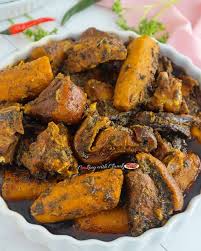
- Early Africans thrived on a variety of food grains, tubers, fish, meat and plant-based oils. Many of the ingredients have endured till today, due to which starch and meat still form a part of daily diet.
- In the olden days, Africans believed that slow-cooking, grilling and smoking brought out the best flavors in food while retaining the nutrients. Contemporary Africans, in sharp contrast, rely on fast cooking techniques and processed food to keep up with the challenges and demands of modern times. Therefore, while they might be preparing the traditional one-pot meal, the cooking time is much shorter and the utensils lot sturdier than clay and earthenware pots.
- Eating, in African culture, has always been a community activity, wherein people help themselves from the same platter and hold discussions over meals. While the practice of eating as a commune continues to define African food habits in certain communities, it is often not possible in urban settings and nuclear families.
That being said, the custom of preparing food and sharing it with everyone around still lingers. Although it may not form a part of daily routine, this custom upholds the ethos of African food habits of sharing in a meaningful way.
Ingredients That Define African Food Habits
Despite the impact of shifting lifestyles, certain ingredients remain central to African food habits. Walk into the kitchen in a typical African household, and you are bound to come across –
Starchy Staples
Starch forms the backbone of African cooking – whether it is a stew or a mélange of meat and vegetables, starch forms the base of the dish. Africans rely on starch owing to two main reasons. Firstly, it satiates hunger, wherein just a few bites could cause you to feel full. Secondly, it balances the strong flavor of the sauces and other spices by lending a bold counter-flavor.
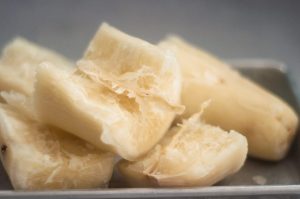
A common source of starch that features prominently in African food habits is cassava, a root vegetable that can be boiled, roasted, fermented or simply mashed into dough. Yam, another tuber which is naturally enriched with starch, forms an integral part of West African food habits. Being a close cousin of the sweet potato, it is larger and carries a dry texture, which renders it a suitable ingredient for stew.
Maize found its way into African food habits as a result of trade with western countries. Gradually it has replaced traditional grains like millet that once defined African porridges and flat-breads. Now it forms a staple in East African and Southern African diets, representing a generational shift in eating habits.
Condiments and Blended Flavors
Sample an African dish, and you are bound to be hit by the multitude of flavors that register all at once. This explains why African food habits relish complex flavors, which emerge as a result of combining locally available herbs and condiments. Given the vast expanse of the African continent, spice blends differ as per region, and add a zing to the palate which is unique to the area.
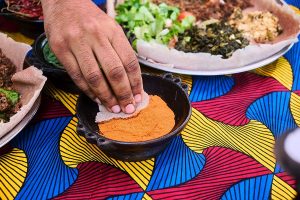
East African countries rely on hot and spicy blends to flavor daily cooking, and Berbere happens to be a particularly popular condiment. While paprika and chili dominate the flavor profile, other spices like cinnamon, cloves and cardamom add both aroma and subtle flavor. Ethiopian taste buds are also used to Mitmita, which consists of orange chilis ground with salt and cardamom.
Travel westward across the Sahara Desert, and African food habits lean towards nutty and tangy tastes. Yaji, also known as Suya spice, blends roasted peanuts with ginger and chili peppers, to create a delicious nutty seasoning used for roasts. West African cuisine also uses Melle pepper, an alternative to traditional peppercorns, to lend a bitter and tangy aftertaste.
Native African taste buds in the southern part of the continent use Piri-Piri to render their roasted/grilled meats hot and fiery. Much of the intense heat of this spice blend comes from bird’s-eye chili, a variety of chili pepper which is native to Africa and has been a part of African food habits since generations. Culinary creations in northern Africa employ Ras-as-Hanout, which blends multiple spices into an aromatic and flavorful outcome.
Greens – Leafy & Non-Leafy
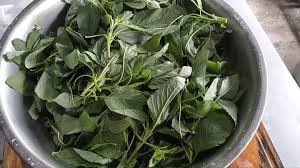
Apart from roots and tubers, African cuisine makes liberal use of leafy greens to cater for the nutritional aspect. Amaranth regularly features in the daily meals, often as a revered side-dish. Traditional greens like Spider Plant and African Nightshade, which carry a bitter and pungent flavor, feature less in contemporary African food habits, particularly in urban areas.
Most African curries, stews and soups feature the African eggplant, which adds a distinct dash of bitterness. Along with okra – a green pod vegetable – the impwa, or eggplant, not just enhances the nutritional value, but also acts as a natural thickening agent.
Final Thoughts
Urbanization has undoubtedly caused African food habits to replace traditional dishes with processed foods and ready-to-eat meals. However, this change remains limited to certain urban pockets, while majority of the population continues to follow traditional recipes with minor changes and tweaks. For example, nowadays people prefer to use proprietary peanut butter rather than roasting and grinding peanuts at home while creating a spice blend. Likewise, contemporary preparations have substituted yam with sweet potato owing to the ease of handling and shorter cooking time.
Infiltration of processed foods has also led to health problems manifesting in form of obesity and lifestyle diseases. African food upholds balance while providing complex flavors and wholesome nutrition, which enables people remain energized despite the harsh and arid climate. So, the impact of change in African food habits is both positive and negative. On one hand, it has introduced modern twists to traditional recipes, and on the other hand, it has disrupted the nutrition profile.
At FSD International, we provide eclectic options to those who wish to combine the old with the new. Having realized the importance of traditional cooking, we create solutions that provide the best of both worlds. Our products enable you to find suitable replacements while retaining the goodness of the dish in terms of both nutrition and flavor.